Kindness can be attractive because it shows how you treat people when there's nothing to gain. Courtesy to a waiter, thoughtfulness towards a friend and respect for a woman's choices reveal more than a grand romantic gesture. It isn't a trick for winning affection; it's a quality that matters in its own right.
The dog was called Napoleon. He weighed approximately as much as a Sunday newspaper and had the temperament of a deposed emperor.
I'd gone to a country-house garden party expecting sunshine, a little flirtation and perhaps a commendation for my magnificently tailored white trousers. Instead, I found myself under a trestle table attempting to free Napoleon's lead from the legs of a folding chair. He had already eaten half a sausage roll and was showing absolutely no gratitude.
"Careful," called a woman in a wonderfully outrageous floral dress. "He bites."
"Only his social inferiors, I imagine," I replied, as the little brute attached himself to my cuff.
By the time I'd disentangled him, my trousers were green at the knees and somebody had knocked a plate of strawberry trifle onto my shoes. The woman laughed so hard she had to sit down.
We spent the next hour talking. Napoleon spent it plotting the downfall of the catering staff.
I'd intended to make an entrance. Instead, I made myself useful. Funny how often those turn out to be different things.
So, is kindness attractive to women? Yes, many women value kindness in men, especially when considering someone for a lasting relationship. Studies of partner preferences have found that helpful, considerate behaviour can increase romantic desirability. It doesn't make every kind man irresistible, and kindness alone isn't a substitute for chemistry. But the way you treat people can reveal a great deal more about you than your best photograph.
And, as Napoleon demonstrated, it sometimes reveals the quality of your dry cleaner.
Why kindness has rather more sex appeal than its reputation suggests
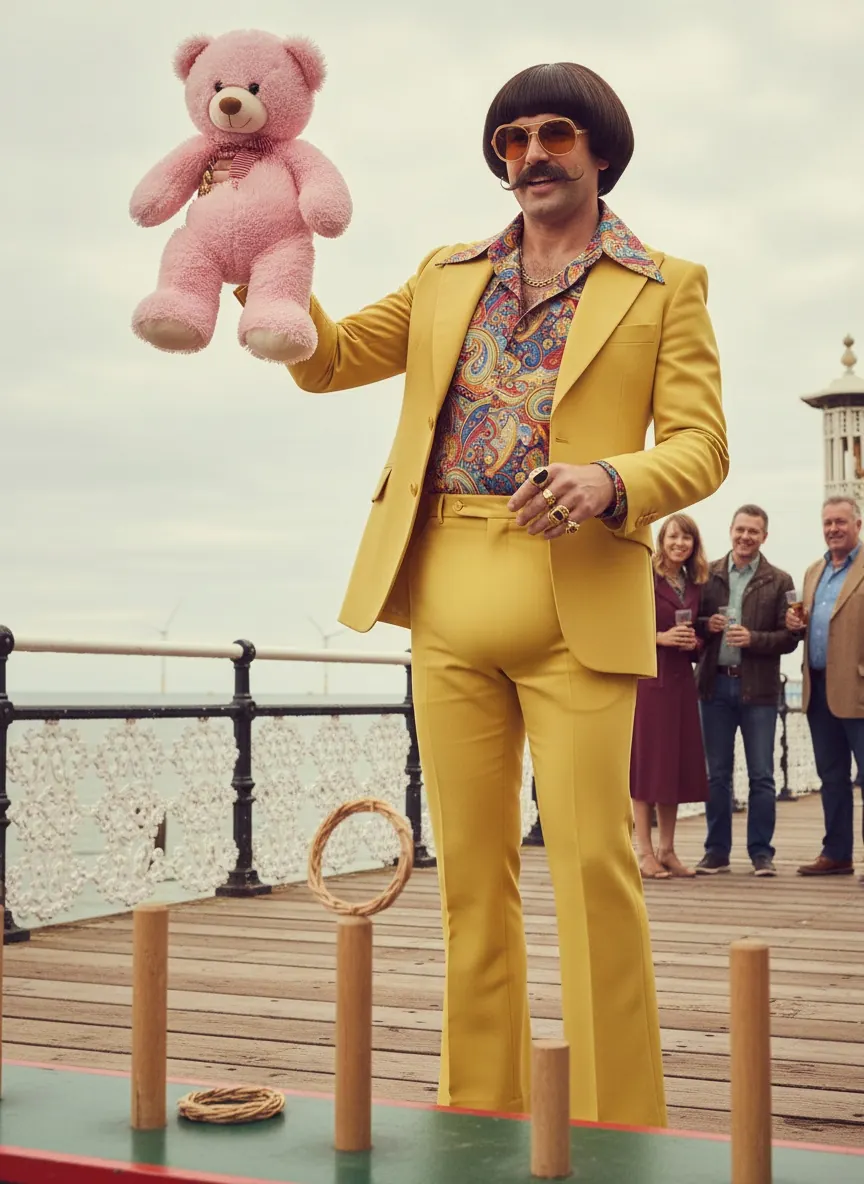
Somewhere along the way, kindness acquired an unfortunate image. Say "kind man" and certain people picture a chap in a beige cardigan who collects old newspapers and apologises when somebody else treads on his foot.
Rubbish. A kind man can be bold, funny, adventurous, spectacularly flirtatious and possessed of a wardrobe that would trouble a bishop. Kindness describes how he treats people, not how quietly he enters a room.
It's quite easy to admire somebody for one evening. They're handsome, they can tell a good story, and they've chosen a marvellous jacket. But suppose you saw them when a friend was upset, a plan fell apart or another person needed a little help. Would you still like what you saw?
That's where kindness becomes interesting. It offers a glimpse of the person you might have beside you when life is less glamorous.
Researchers have tested this rather than merely asking people whether they approve of being nice. In one British study, women rated photographs of men alongside descriptions of helpful or unhelpful actions. Kind behaviour improved desirability ratings, particularly when the women were thinking about longer-term relationships. Physical appearance still mattered; the two qualities could work together.
These were judgements about descriptions, not secret footage of actual romances, so I wouldn't use them to predict your chances at the next dance. They do suggest that consideration can be part of what people find attractive rather than merely a consolation prize.
The difference between a kind man and a man putting on a show
I once knew a fellow who could buy flowers with the expression of somebody unveiling a statue in his own honour.
There'd be a magnificent bouquet, a speech about what a generous soul he was, and then a quick glance around the room to make certain everybody had noticed.
He was especially fond of giving presents in public. Privately, he was forever too busy to keep the smallest promise.
There's a name for that sort of performance, though I'm far too polite to print the one that first springs to mind.
Real kindness is often gloriously unphotogenic. It's staying behind to help a friend clear up when the interesting guests have left. It's remembering that somebody's nervous about a particular appointment and asking how it went. It's taking a little trouble because another person matters, not because you've spotted an opportunity to improve your reputation.
The test isn't whether the gesture is grand. It's whether it makes sense for the person receiving it.
A dozen roses might be perfect for a woman who adores romance. For somebody who has just told you she's allergic to half the plant kingdom, they suggest you've listened to absolutely nothing.
Kindness has to arrive with attention. Otherwise it's just an expensive parcel with your own name written all over it.
Why women may notice kindness differently on a first date and later on
If all you've seen of someone is a photograph, you'll naturally judge whatever the photograph shows. There isn't much room in a headshot for evidence that a man remembers your mother's birthday or volunteers to help his brother move house.
Spend actual time together and different qualities have the chance to appear.
That helps explain why research on kindness sometimes finds a stronger effect when people imagine a long-term partner rather than a brief fling. A man's ability to be thoughtful may matter particularly when somebody is imagining years of ordinary life, not merely an exciting Saturday night.
Other studies have found preferences for kindness in both women and men, with the emphasis changing according to the relationship being considered and the people taking part. So please don't let anybody tell you that only women value decent behaviour, or that all women put it above everything else.
Personally, I rather like to be fancied and regarded as a reasonably good egg. I don't see why a gentleman should settle for one when the other remains available.
Of course, kindness isn't the same as compatibility. A generous soul can still be completely wrong for your life. Nor does being considerate automatically create physical attraction.
What kindness can do is give attraction something substantial to grow around. And there's nothing dull about that.
A kind man needn't be a pushover
At a seaside hotel one summer, I volunteered to help a guest with her suitcase. A second appeared, followed by a third, and then the astonishing revelation that her entire extended family had apparently appointed me head porter.
I offered to establish a small luggage syndicate if the cousins were prepared to join. She laughed, called me cheeky and went to fetch them.
Everyone got upstairs. I retained the use of my arms.
Some men think kindness means agreeing with every suggestion, laughing at every joke and abandoning their own plans the moment somebody attractive raises an eyebrow. It's an exhausting way to spend a weekend.
You can be considerate and still have a personality. Suppose she wants to see a band you loathe. You might go just to share the evening. Equally, you might say, "Take your sister to this one, and I'll take you somewhere wonderful on Sunday."
Thoughtfulness is rather nicer when you choose it freely instead of privately building a list of sacrifices and hoping somebody notices.
If you're inclined to say yes to everything, see how to show kindness without becoming a people-pleaser.
The little moments tell a bigger story
A little mishap can show you somebody's character more clearly than a perfectly rehearsed compliment.
A friend once invited me to a tiny theatre production. It was one of those heroic amateur enterprises where three people were playing twelve roles and the scenery appeared to have been constructed out of cardboard and prayer. I arrived to find a man who'd spent the interval complimenting every glamorous member of the cast.
Very smooth. Beautiful delivery. Almost as much polish as my shoes.
Then one of the older wardrobe volunteers dropped a box of costume jewellery. The smooth talker stepped around it as though avoiding a puddle. Another guest put down his drink and helped gather the scattered brooches. No audience, no speech, no dramatic swelling of violins.
The second fellow barely mentioned it afterwards. That, to my mind, was rather more revealing than the first man's entire performance.
Kindness shows itself in what a person notices and what they consider worth their trouble. A woman might value the fellow who remembers an important detail, treats her friends thoughtfully or makes a hard afternoon a little easier. None of this needs to be particularly grand.
Equally, don't assume that a single kind gesture proves someone's character. Everybody has good afternoons. The more interesting question is whether the thoughtfulness continues when the evening is less marvellous and the audience has gone home.
Can kindness actually make a man more physically appealing?
It can change how somebody sees you, although it won't rewrite their preferences overnight.
Imagine that a woman initially finds a man pleasant but not particularly striking. She sees his quick wit, how naturally he helps a friend through an awkward moment, and how generous he is with his attention. She might gradually find him more appealing. Equally, she might simply come to admire him enormously.
Those are different outcomes. One isn't a failure.
Experiments in which people rated possible partners have found that descriptions of altruistic behaviour could make men more desirable, sometimes in combination with physical attractiveness. That's a sensible reason to take character seriously. It isn't a secret trick for making your nose look smaller.
Physical desire and kindness can sit quite happily together. You can admire a woman's dress, flirt outrageously over a game of croquet, and still be the man who notices she hasn't had a chance to eat lunch.
As far as I'm concerned, being desirable and being considerate are not competing occupations. A gentleman should have time for both.
What I'd actually do on a date
I would not arrive determined to demonstrate fifteen acts of kindness before the pudding. That would be less a date than a sponsored charity challenge.
I'd simply pay attention. If she mentioned an interview last week, I'd ask how it went. If we were choosing somewhere to meet, I'd remember she said she preferred a quieter place. If an unexpected downpour turned our plans upside down, I'd try to make the best of it rather than blaming the weather, the waiter and the entire municipal council.
I'd also bring a little mischief. Consideration needn't be solemn. You can make a woman laugh, be a little daring and still show that her comfort and enjoyment matter to you. In fact, the best romantic evenings often involve all three.
I particularly enjoy the sort of conversation where both people feel free to be ridiculous. A thoughtful question, properly followed up, often opens the door to that. I've more to say on the subject in asking thoughtful follow-up questions on a date.
If she enjoys your company, splendid. If the romance isn't there, a lovely evening hasn't somehow become worthless.
Napoleon, naturally, had the last word
At the garden party, the woman in the floral dress eventually introduced herself as Caroline. She found my predicament with Napoleon enormously entertaining. I found her laugh quite difficult to forget.
Before leaving, I was presented with a freshly washed handkerchief for the trifle stains. Napoleon attempted to eat it.
Did freeing that wretched dog make me irresistibly attractive? I haven't the faintest idea. Caroline and I had a delightful afternoon, and that was quite enough to be going on with.
Here's my view: kindness is attractive because it reveals how a man behaves when life asks him to think about somebody besides himself. Add humour, confidence and a little romantic spark, and you have the makings of marvellous company.
Should you need a little assistance with that last part, my free Seven Secrets to Becoming a Babe Magnet guide is at your service.
And if a dachshund asks you to mind his sausage roll, walk away. He has plans.